Your Trip Blog

Sanju Das

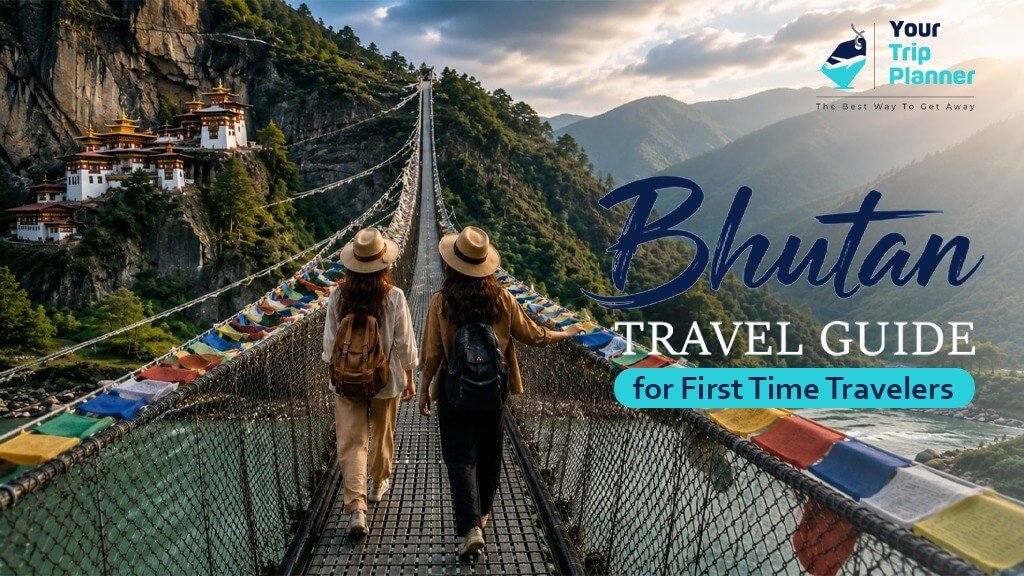
Bhutan Travel Guide for First-Time Travelers 2026

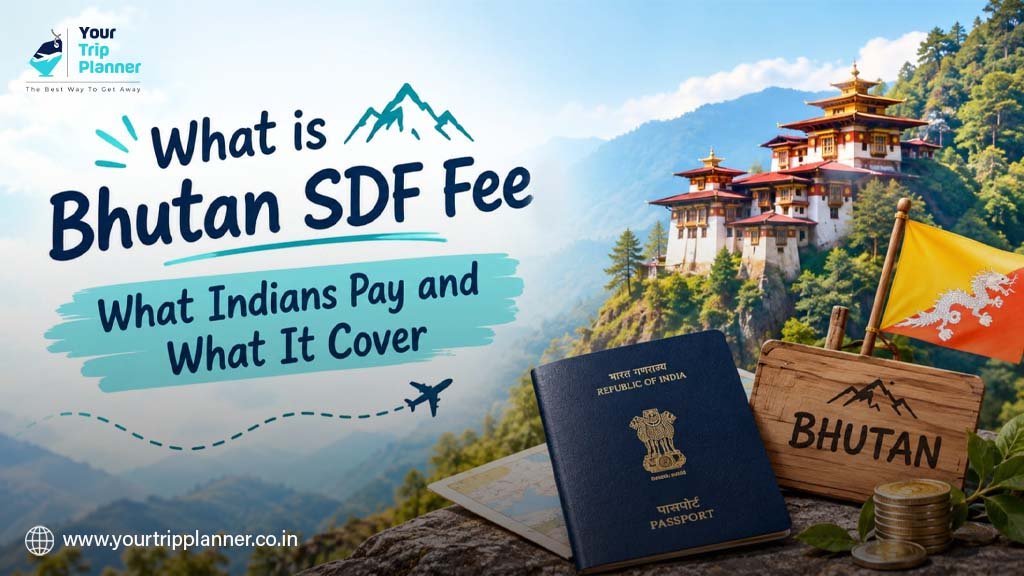
This Bhutan travel guide covers everything a first-time Indian traveler needs to know – permits, SDF fees, the best time to visit, top places to see, what it costs, and how to get there without confusion.   Most people who visit Bhutan say the same thing when they come back – I wish I’d gone sooner.   Not because it’s easy to get to. Not because it’s cheap. But because it’s the kind of place that actually delivers on what it promises. The monasteries look exactly like the photos. The valleys are that quiet. The air genuinely smells different.   If you’re planning your first trip and don’t know where to start, this guide covers everything – honestly, without the usual travel-blog padding. Why First-Time Travelers Fall in Love with Bhutan Bhutan works for first-time travelers because it’s genuinely unlike anywhere else – low crowds, high safety, and a culture that feels completely undisturbed by mass tourism.   Walk into Thimphu and you’ll notice something’s missing. No hoardings. No traffic lights. No chaos. Just a town that moves at its own pace and doesn’t apologize for it.   The government caps tourist numbers deliberately. Which means Tiger’s Nest isn’t a stampede, Punakha Dzong doesn’t feel like a theme park, and you can actually stand somewhere beautiful in silence.   For Indians specifically, there’s something else – Bhutan feels oddly comfortable. The food is recognizable, people are warm, and the cultural overlap is real. But it’s still completely its own place. That balance is hard to find anywhere else. Do Indians Need a Visa for Bhutan? No – Indian nationals do not need a visa for Bhutan. You need an Entry Permit, which is issued at Phuentsholing land border or Paro Airport on arrival, or obtained online in advance through Bhutan’s official immigration portal.   Good news – there’s no visa, no embassy appointment, no weeks of waiting. The answer is simpler than most people expect.   What you do need to know:   Valid documents: Indian Passport (recommended) or Voter ID card. That’s it. Important: Aadhaar card, PAN card, and driving license are NOT accepted at the Bhutan border – even though this surprises a lot of first-timers. Entry Permit covers Thimphu and Paro only. Route Permit (also free) is needed for destinations beyond Thimphu and Paro – Punakha, Haa Valley, Bumthang. This is obtained at the Immigration Office in Thimphu, usually within an hour. Applying online at least 5 working days before arrival is strongly recommended to avoid waiting at the checkpoint. A good travel agency in Bhutan handles the entire permit process for you – so by the time you arrive at the border, everything is sorted. The SDF – What It Is and What It Costs in 2026 The Sustainable Development Fee (SDF) is a mandatory daily levy charged to all tourists visiting Bhutan – Indian nationals pay ₹1,200 per person per night as of 2026, confirmed at this rate through August 2027.   Think of it as Bhutan’s way of keeping tourism meaningful rather than just massive. The money funds free healthcare, free education, and environmental conservation for Bhutan’s citizens. It’s a genuine philosophy, not just a fee.   For a 5-night trip: ₹6,000 per person in SDF. For a 7-night trip: ₹8,400 per person in SDF. Children aged 6-12 pay 50% of the SDF. Children under 5 are fully exempt.   One more cost to factor in for 2026: Bhutan introduced a 5% GST on tourism services from January 2026. This applies to hotel bookings, transport hire, and guide fees – but not to the SDF itself.   Your Trip Planner includes a full SDF calculation in every quote, so you see the real total before you book – not after. When Is the Best Time to Visit Bhutan? The best time to visit Bhutan is spring (March to May) or autumn (September to November) – both seasons offer clear skies, comfortable temperatures, and the best views of the Himalayas.   Here’s the honest breakdown by season:   Season Months Weather Best For Spring March – May Warm, clear, rhododendrons in bloom Trekking, sightseeing, photography Autumn September – November Crisp, clear, excellent mountain views Best overall experience, major festivals Monsoon June – August Heavy rain, lush green valleys Budget travelers, fewer crowds Winter December – February Cold, possible snow at high altitudes Offbeat travel, near-empty monasteries If someone puts a gun to your head and says pick one month – pick October. The Tshechu festival fills Thimphu with masked dances and colour, the morning skies are sharp enough to count Himalayan peaks from Dochula Pass, and the temperature is perfect for hiking. It’s the month Bhutan pulls out all the stops. How to Get to Bhutan from India The most practical and affordable way for Indian travelers to reach Bhutan is by road through Jaigaon – crossing into Phuentsholing, the Bhutanese border town, which takes minutes on foot.   By road through Jaigaon (recommended): Fly into Bagdogra or take a train to NJP (New Jalpaiguri) Taxi from Bagdogra/NJP to Jaigaon: approximately ₹4,000–₹5,500 Cross into Phuentsholing on foot – the border is walkable From Phuentsholing to Thimphu: approximately 4–5 hours by road From Thimphu to Paro: approximately 1.5 hours By flight into Paro: Direct flights from Kolkata, Delhi, and Mumbai on Druk Air and Bhutan Airlines Significantly more expensive – fares start around ₹15,000 one-way Worth it if you’re short on time; the Paro approach is one of the most spectacular landings in the world Honestly, the Paro flight is stunning – the pilot threads between mountain peaks and it feels like the plane shouldn’t fit. But it’s expensive and the seats fill fast. If you’re coming from Kolkata, Siliguri, or anywhere in North Bengal, the road through Jaigaon makes far more sense. You save money, you travel at your own pace, and crossing the border on foot into Phuentsholing is its own moment – the point where India ends and Bhutan begins. Top Places

Bhutan Travel Guide for First-Time Travelers 2026 Read More »

Bhutan Trip Cost from India 2026: Complete Price Breakdown

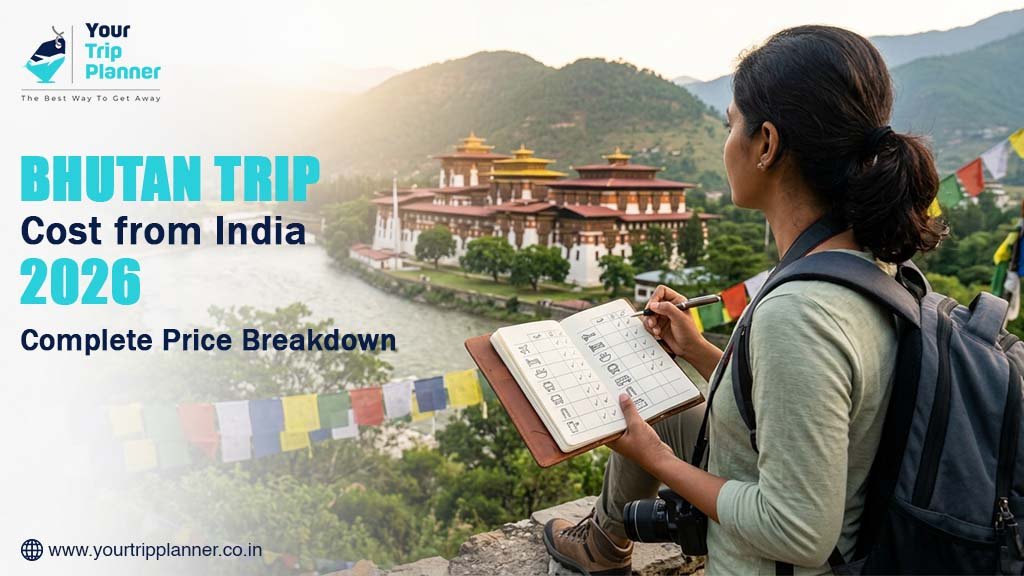
The Bhutan trip cost from India in 2026 typically ranges from ₹15,000 to ₹60,000 per person depending on the duration, accommodation type, group size, and whether you travel during peak or off-peak season.   Bhutan is one of the most asked-about destinations in India right now. And the first question everyone asks before anything else is – how much will it actually cost? Not a vague “it depends.” A real number.   This guide breaks it down honestly – every cost, every fee, no surprises. What Makes Up the Total Bhutan Trip Cost? The total Bhutan trip cost from India includes five main components: the package price, car rental in Bhutan, the Sustainable Development Fee (SDF), personal expenses, and travel to the border.   Understanding each one separately is what stops people from getting surprised at checkout. 1. Package Cost – The Biggest Part This is your accommodation, meals, sightseeing, and local guide – bundled together by your travel agency in Bhutan.   Here’s what standard packages from Jaigaon typically look like: Duration Destinations Covered Approx. Cost Per Person 4 Nights / 5 Days Phuentsholing, Thimphu, Paro ₹15,000 – ₹22,000 5 Nights / 6 Days Thimphu, Punakha, Paro ₹18,000 – ₹28,000 6 Nights / 7 Days Thimphu, Punakha, Paro, Dochula Pass ₹22,000 – ₹35,000 7 Nights / 8 Days Thimphu, Punakha, Paro, Haa Valley ₹28,000 – ₹45,000 9 Nights / 10 Days Full Bhutan including Eastern circuits ₹40,000 – ₹60,000 Note: All rates are approximate and vary by group size, hotel category, and season. Contact Your Trip Planner for an exact quote tailored to your trip. The per-person cost drops significantly in a group. A couple pays more per head than a group of six sharing the same vehicle and hotel rooms. 2. Car Rental in Bhutan – Essential, Not Optional Car rental in Bhutan is not optional – foreign tourists cannot self-drive, so a government-registered vehicle with an experienced driver is required for all sightseeing beyond Phuentsholing.   This is either included in your package or arranged separately. Here’s what to expect: Vehicle Best For Approx. Daily Rate SUV (Creta / Tucson / Santafe) Couples, small families ₹4,500 Innova / Ertiga Families up to 5 ₹5,500 Prado Premium/luxury travel ₹8,000 Hiace Bus Groups of 7–8 ₹7,000 Coaster Bus Large groups 18–22 ₹8,000 – ₹12,000 Note: Rates are approximate and may vary by season, route, and availability. If your package already includes a private vehicle – which most good packages from Your Trip Planner do – this cost is bundled in. Always confirm before booking. 3. Getting to the Border – Bagdogra or NJP to Jaigaon The most affordable way to start your Bhutan trip from India is by road through Jaigaon, with a taxi from Bagdogra Airport or NJP Railway Station costing approximately ₹4,000 to ₹5,500.   This is your India-side travel cost before you even cross the border. Route Vehicle Approx. Cost Bagdogra / NJP → Phuentsholing Dzire (4 passengers) ₹4,000 Bagdogra / NJP → Phuentsholing Innova / Rumion (6 passengers) ₹5,500 Flying into Paro (Bhutan’s only international airport) from Kolkata, Delhi, or Mumbai is faster but significantly more expensive – flights typically start from ₹15,000 one-way. For most Indian travelers, the road route through Jaigaon is the smarter, more affordable choice. 4. Sustainable Development Fee (SDF) – Mandatory Government Charge Indian nationals currently pay ₹1,200 per person per day as the Bhutan Sustainable Development Fee (SDF) – a mandatory government charge separate from your package cost.   This is the one fee most people don’t account for until they’re at the border. The SDF is Bhutan’s way of managing tourism responsibly – protecting the environment and supporting local communities. It applies to every visitor, regardless of which travel agency in Bhutan you book through.   For a 5-night trip, that’s ₹6,000 per person in SDF alone. For a 7-night trip, ₹8,400. Factor this in early.   Indian nationals pay a significantly lower SDF rate than international tourists – that’s one of the biggest cost advantages of traveling to Bhutan from India.   Your Trip Planner includes SDF calculation in your trip planning so you always know the full cost before you book – no last-minute surprises at the Phuentsholing checkpoint. 5. Personal Expenses – What People Forget to Budget These are the costs outside your package that quietly add up: Shopping and souvenirs: Thimphu’s weekend market and Paro’s craft shops – budget ₹1,000 to ₹5,000 depending on how much you shop Entry fees: Tiger’s Nest trek entry, museum fees – approximately ₹500 to ₹1,500 total Tips for guide and driver: Standard practice in Bhutan – ₹200 to ₹500 per day is reasonable Alcohol and personal snacks: Not included in most packages Budget roughly ₹2,000 to ₹5,000 per person for personal expenses on a standard trip. Total Bhutan Trip Cost Summary – Quick Reference Trip Type Duration Approx. Total Cost Per Person Budget trip (couple, shared vehicle) 4N5D ₹20,000 – ₹28,000 Mid-range trip (family of 4) 6N7D ₹28,000 – ₹38,000 Comfortable trip (small group) 7N8D ₹35,000 – ₹48,000 Premium/honeymoon trip 6N7D ₹40,000 – ₹60,000 These are all-inclusive estimates covering package, SDF, border transfer, and personal expenses.   Note: All costs are approximate for 2026 and subject to change. Contact Your Trip Planner for a custom quote based on your exact travel dates, group size, and preferences. When Is Bhutan Affordable to Visit? The cheapest time to visit Bhutan is during the monsoon season (June to September) and winter (January to February) – both are off-peak periods with lower hotel rates and more vehicle availability.   Peak season (March to May and October to November) brings higher demand, fuller hotels, and slightly higher package prices – but also the best weather and the most famous festivals.   If budget is your priority, plan for June or January. If experience is your priority, plan for October or March. Why Booking Through a Local Travel Agency in Bhutan Saves You Money Booking through a border-based travel agency in Bhutan like Your

Bhutan Trip Cost from India 2026: Complete Price Breakdown Read More »

Darjeeling Travel Guide: Best Time, Places to Visit & Travel Tips

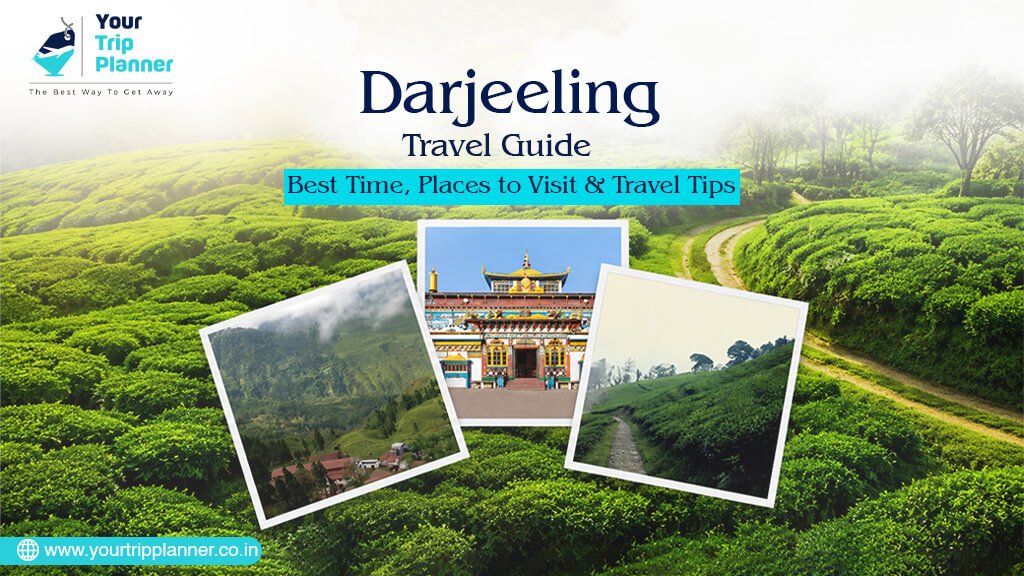
There’s something about Darjeeling that stays with you.   You try once, and you’re already planning on trying it again before you get home. The morning low temperatures. Tea fragrance all around. The one sunrise over Kanchenjunga that makes one go completely silent for a few minutes.   If you’ve been thinking about going to Darjeeling, now’s the moment. Here’s your complete Darjeeling travel guide – everything you need to know about when to go, what to see, and how to make the most of every day in the hills. Why Do People Keep Going Back to Darjeeling? Travelers keep returning to Darjeeling because it consistently delivers what most hill stations only promise: real mountain views, genuine culture, and an unhurried pace that’s hard to find anywhere else. This Darjeeling travel guide exists because the place genuinely deserves one. When Should You Actually Go? The best time to visit Darjeeling is spring (March to May) or autumn (October to December) – both offer clear skies, comfortable temperatures, and the best views of Kanchenjunga.     Season Months Weather Best For Spring March to May Pleasant, clear skies Sightseeing, photography, rhododendrons in bloom Autumn October to December Crisp and clear Best views of Kanchenjunga, mountain clarity Monsoon June to September Rainy and dramatic Lush greenery, but landslides and tricky roads Winter January to February Cold, possible snowfall Offbeat travel, thin crowds, quiet experience Places You Simply Cannot Skip The must-visit places in Darjeeling include Tiger Hill, Batasia Loop, the Toy Train, Happy Valley Tea Estate, and Rock Garden – together covering the best of the town’s scenery, culture, and history. Tiger Hill Set your alarm for 3 AM. Yes, really. The drive up in the dark, the slow gathering of light, and then that moment when the sun hits Kanchenjunga – it’s one of those things you’ll talk about for years. Altitude: 2,590 metres. Located 11 km from Darjeeling town. Batasia Loop Located just 5 km from Darjeeling town, en route to Tiger Hill. Watch the toy train spiral through the loop with mountain views all around. There’s a war memorial here too. It’s quiet and moving. The Toy Train UNESCO World Heritage Site since 1999. The 88 km route runs from NJP to Darjeeling. A slow, charming ride through tea gardens and mountain curves. It doesn’t go fast. That’s the whole point. Sit back and enjoy it. Tea Gardens Happy Valley Tea Estate is one of the oldest in Darjeeling, established in 1854. Walk through the rows. Watch how the leaves are picked. Taste the tea fresh. This is one of those experiences that actually lives up to the hype. Rock Garden and Ganga Maya Park Located 10 km from Darjeeling town, at an altitude of approximately 1,500 metres. Most tourists skip this one. Don’t. Waterfalls, terraced gardens, and almost no crowd. It’s genuinely peaceful. Mirik A short drive away. A calm lake, orange orchards, and a suspension bridge. Perfect if you have an extra half day and want something quieter. Located 49 km from Darjeeling, approximately 1.5 hours by road. Padmaja Naidu Zoological Park One of the highest altitude zoos in India at 2,134 metres. Home to red pandas and snow leopards.Go here if you’re travelling with kids. Red pandas, snow leopards, Tibetan wolves. One of the best high-altitude zoos in India.   These Darjeeling tourist places alone can fill 3 to 4 days very comfortably. How Many Days Do You Need? Most travelers need 3 to 4 nights in Darjeeling for a comfortable trip – enough to cover all major sightseeing without feeling rushed.   3 Days / 2 Nights – A quick getaway. Tiger Hill, toy train, tea gardens, Mall Road. Enough to fall in love with the place.   4 Days / 3 Nights – The sweet spot. Add Mirik and Rock Garden. Breathe a little more.   5 to 6 Days – Combine Darjeeling with Kalimpong or Gangtok. A full North Bengal experience that’s hard to beat.   Most Darjeeling trips run between 3 to 5 nights. Pick what suits your pace. Getting Around – Don’t Underestimate This Part Darjeeling roads are narrow, winding, and honestly a little unpredictable. Public transport works for locals. For tourists, it can be a headache.   A good car rental in Darjeeling changes the whole experience. You leave when you want. You stop where you want. No shared jeeps. No waiting. No missing the sunrise because transport didn’t show up.   If your Darjeeling trip includes a dedicated car and driver, great. If not, sort this out separately before you arrive. It genuinely makes a big difference. Small Tips That Save Big Headaches Pack layers. Even in summer, Darjeeling mornings are cold. A light jacket is not optional. Carry cash. A lot of local places don’t accept cards. Markets, small restaurants, roadside tea stalls – all cash.   Book your hotel early. Peak season fills up fast. Don’t learn this the hard way. Arrange Tiger Hill the night before. You need a vehicle ready by 3 to 4 AM. Don’t leave this in the morning.   Eat the local food. Momos, thukpa, fresh Darjeeling tea from a tiny roadside shop. This is not optional. This is the whole point.   Take it slow on day one. The altitude is around 2,000 metres. If you’re coming from a hot city, let your body adjust before you go running around sightseeing. Why Choose Your Trip Planner for Your Darjeeling Trip Your Trip Planner is based at the Indo-Bhutan border in Jaigaon – with branch offices in Siliguri and Gangtok, we’re already where your Darjeeling trip begins.   We know these roads. Our drivers have done them a thousand times. We know which hotels actually deliver in your budget, which routes to avoid after heavy rain, and which areas need permits sorted in advance.   Planning a hill trip yourself feels doable until it isn’t. Roads change. Hotels fill up. Local knowledge is worth more than any travel app.   You

Darjeeling Travel Guide: Best Time, Places to Visit & Travel Tips Read More »

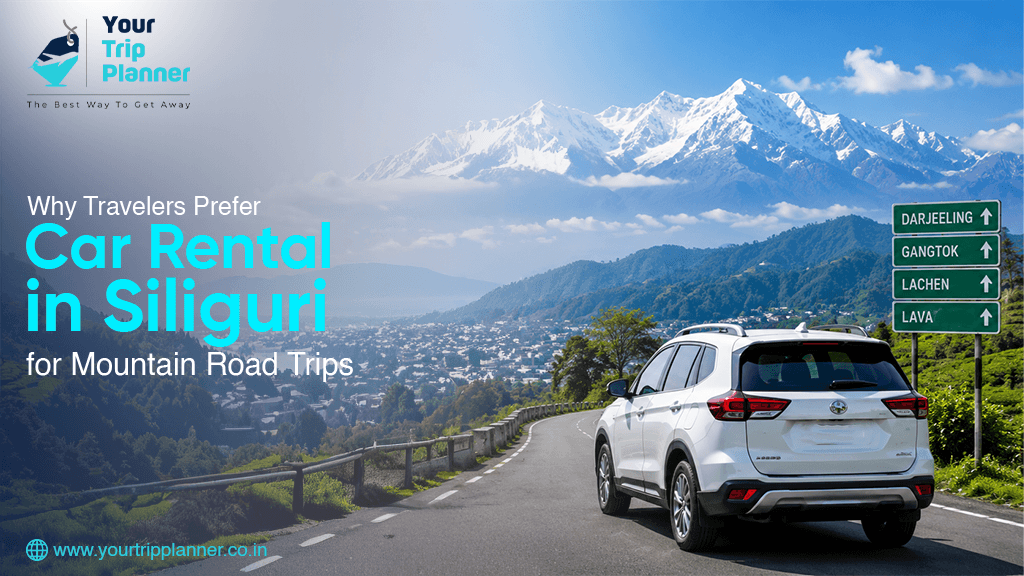
Why Travelers Prefer Car Rental in Siliguri for Mountain Road Trips

Car rental in Siliguri is the smartest first move for any hill trip – because Darjeeling, Sikkim, and Bhutan all start here, and a private car gives you the freedom that trains and shared jeeps never will.   Siliguri isn’t the destination. It’s the doorway.   Every mountain road begins here. And the way you leave Siliguri sets the tone for everything that follows. Siliguri: The Gateway Nobody Talks About Enough Most travelers arrive at NJP or Bagdogra and immediately face the same question: now what?   Shared taxis are crowded. Buses are slow. Roadside haggling with luggage in hand is nobody’s idea of a good start.   Book your car rental in Siliguri in advance and none of that is your problem. Your vehicle is waiting. Your driver knows the route. You leave when you’re ready. Siliguri to Darjeeling Cab: The Classic Mountain Run Siliguri to Darjeeling cab ride takes roughly 3 hours – through tea gardens, misty ridgelines, and the famous Batasia Loop where the Toy Train crosses the road.   In a shared vehicle, you stop where the driver decides. In a private car, you stop where you decide.   That’s the difference. Simple as that. Hill Station Car Rental in Siliguri: Drivers Who Know the Roads Mountain roads twist. They narrow. They change completely in the monsoon season.   The best car rental in Siliguri isn’t just about the vehicle – it’s about the driver who knows which pass had a landslide last week, which route is fastest on a Sunday morning, and when to leave to beat the checkpoint queues.   That local knowledge is what makes a mountain drive scenic instead of stressful. Siliguri to Sikkim: Permits, Altitude, and Timing Matter Sikkim isn’t just a drive – it’s a permit zone with checkpoints and altitude shifts that catch first-timers off guard.   A good Siliguri to Sikkim taxi service handles this before you even ask. Inner-line permits arranged. Departure timed correctly. No surprises at the gate.   Gangtok, Tsomgo Lake, Lachung, Yumthang Valley – all of it becomes straightforward when the operator knows what they’re doing. Siliguri Taxi for Bhutan: A Little Bit Different Bhutan is a border crossing, not just a hill station.   Your car rental in Siliguri takes you to Jaigaon. At the border, everything switches – Bhutanese vehicles, licensed guide, entry permits. Foreign-plated cars aren’t allowed beyond Phuentsholing.   Your Trip Planner coordinates both sides of this handover so you’re not figuring it out at the border gate. Best Car Rental Siliguri: What Actually Separates Good From Average Not all rental services are the same. Here’s what the good ones have in common: Well-maintained vehicles suited for hill terrain Drivers with real experience on mountain routes Transparent pricing – no last-minute additions Flexibility to adjust your plan mid-trip A cheap deal that breaks down on a mountain pass isn’t cheap. It’s a ruined itinerary. Quick Tips Before You Head Into the Hills Book early – peak season (Oct–Dec, Mar–May) fills fast Pack layers – Siliguri is warm, Darjeeling is cold Carry cash – hill towns and tolls often don’t take cards Build buffer time – landslides, cattle, viewpoints all add minutes Trust your driver’s pace – rushing mountain roads is never worth it Frequently Asked Questions (FAQs) Q1. Is it better to book a car in advance or arrange one after arriving in Siliguri? You must book beforehand. Especially during peak season, you must book in advance as there can be a shortage of cars and trusted drivers. Q2. Can the same car take me to Darjeeling, Sikkim, and Bhutan on one trip? Not always. Sikkim requires permits and specific vehicle registrations, and Bhutan requires a vehicle change at the border. Most operators plan this in advance. Q3. How long does a Siliguri to Darjeeling cab ride take? Roughly 3 hours, depending on traffic and weather conditions along the hill roads. Q4. Do I need special permits for a Siliguri to Sikkim taxi? Yes, inner-line permits are required for Sikkim, and a good rental service typically helps arrange these in advance. Q5. Is hill station car rental Siliguri safe during monsoon? Yes, with experienced drivers who know which routes to avoid and adjust timing based on weather updates. Ready to Start Your Mountain Road Trip? Reliable vehicles. Drivers who know these roads by heart. Itineraries built around you. Your Trip Planner has been arranging Siliguri cab service for hill travelers for years – to Darjeeling, Sikkim, Bhutan, and beyond. Call: +91 70766 67573 | +91 75859 71503 Email: yourtripplannerindia@gmail.com Website: www.yourtripplanner.co.in

Why Travelers Prefer Car Rental in Siliguri for Mountain Road Trips Read More »

Car Rental in Bhutan for Thimphu, Paro, Punakha & Eastern Bhutan Tours

Imagine winding mountain roads, prayer flags dancing in the wind and valleys that seem like a painting. Welcome to Bhutan – a country of the Thunder Dragon. The problem is, though. Behind some seriously steep, twisty roads lies Bhutan’s beauty. A reliable Car Rental in Bhutan isn’t something that you need, it’s something that you need!   Going out on a dedicated car rental in Bhutan has its advantages because Bhutan’s roads are different from the city roads. They meander through hills. They hike on tall passes. The availability of public transport is poor. Outside the main towns buses are slow and infrequent. Why Do You Need a Dedicated Car Rental in Bhutan? A dedicated car rental in Bhutan gives you the freedom to travel on your own schedule, and it’s also the only legal way for foreign tourists to get around, since self-driving is not permitted.   Bhutan’s roads are unlike city roads. They climb through hills, rise sharply over high mountain passes, and wind through valleys where public transport runs slowly and infrequently. Outside the main towns, a private vehicle isn’t a luxury, it’s a practical necessity.   There’s an important rule to know: foreign tourists cannot self-drive rental cars in Bhutan. The government permits only chauffeur-driven vehicles for visitors. This is actually an advantage, a government-registered Bhutanese driver does far more than navigate. They know the roads in all seasons, understand local permit checkpoints, and often serve as informal guides along the way.   A dedicated Bhutan car rental is therefore not just convenient, it’s the safest and most legal way to travel as a visitor. Types of Car Available for Rent in Bhutan Car rental in Bhutan covers sedans for city sightseeing, SUVs for hill routes, Tempo Travellers for groups, and luxury vehicles for premium packages, with the right choice depending on your group size and route. Sedans: Good for couples or small families. Comfortable for short city trips. Best for Thimphu and Paro sightseeing. SUVs:  It is best for hill trips. You can choose this car for destinations like Punakha, Bumthang, and Haa Valley. More legroom and better grip on mountain terrain. Tempo Travellers / Mini Vans: Suited for larger groups. Great for corporate tours or big families. Roomy and practical for multi-day journeys. Luxury Vehicles: For travelers who want extra comfort. Often used for premium tour packages. Smooth rides on long routes. Choosing the right vehicle depends on your group size and route. A trusted Cab Service in Bhutan provider can help you decide. Popular Routes Covered by Car Rental Services in Bhutan The most popular car rental routes in Bhutan run from Jaigaon or Phuentsholing through Thimphu, Paro, and Punakha, with longer circuits extending to Bumthang and Eastern Bhutan. ● Jaigaon/Phuentsholing → Thimphu: This is where most trips begin. It’s the gateway route into Bhutan and leads straight to the capital.● Thimphu → Paro: Home to the iconic Tiger’s Nest Monastery, perched dramatically on a cliffside. A must for every first-timer.● Thimphu → Punakha: The scenic route, cutting through Dochula Pass, where clear days reward you with sweeping Himalayan views.● Punakha → Bumthang: The longer route into central Bhutan, ideal for travelers who want to go deeper into the country’s culture and landscape. The longer route to central Bhutan is from Punakha to Bumthang. Eastern Bhutan Circuits – For remote valleys such as Trashigang and Mongar, on request.Your car rental in Bhutan includes permit coordination at each checkpoint. Indian nationals need entry and inner-line permits issued at Phuentsholing, Your Trip Planner handles the full documentation process before your journey begins. How Much Does Car Rental in Bhutan Cost? Car rental in Bhutan is priced by vehicle type and trip length, with most daily rates including fuel, driver allowance, and lodging, and no hidden charges when you book with a transparent operator.     Vehicle Rates (Per Day, Approximate) Recommended Vehicle Approx. Rate Seating Capacity Best For SUV (Creta / Tucson / Santa Fe or similar) ₹4,500/day Up to 3 passengers Thimphu, Paro, Punakha – best for small groups on hill routes Ertiga / Xylo / Innova ₹5,000/day Up to 5 passengers Thimphu city tours, Paro sightseeing, short family trips Prado ₹6,000/day Up to 3 passengers Premium hill routes – Haa Valley, Bumthang, Eastern Bhutan Hiace Bus ₹6,500/day Up to 7 passengers Small group tours across Thimphu, Punakha & Paro Hiace High Roof ₹7,500/day Up to 8 passengers Medium group tours, multi-day itineraries Coaster Bus (18 seater) ₹8,000/day Up to 18 passengers Large group tours, school/corporate trips Coaster Bus (22 seater) ₹9,000/day Up to 22 passengers Large group tours, fixed departure packages Bagdogra/NJP → Phuentsholing (Dzire or similar) ₹4,000/trip Up to 4 passengers Airport or station transfer to Bhutan border Bagdogra/NJP → Phuentsholing (Rumion / Innova) ₹5,000/trip Up to 7 passengers Family/group airport or station transfer to Bhutan border Note: All rates listed above are approximate and may vary depending on the season, route, trip duration, fuel prices, and availability at the time of booking. Contact Your Trip Planner directly for an exact, up-to-date quote tailored to your itinerary. Most rates include fuel, driver food, and driver lodging. There are no hidden charges when you book through Your Trip Planner.   Note on the Sustainable Development Fee (SDF): In addition to vehicle costs, Bhutan charges a mandatory SDF for all tourists. Indian nationals currently pay approximately ₹1,200 to ₹1,400 per person per day. This is a government fee separate from your car rental cost and applies regardless of which operator you book through. Tips for Booking a Car Rental in Bhutan The most important tips for booking car rental in Bhutan are booking early, confirming what’s included in your rate, and choosing experienced drivers who know the mountain roads.   Book in advance – Peak season fills up fast. Reserve your car weeks ahead. Check what’s included – Confirm if fuel, driver allowance, and permits are part of the price. Choose experienced drivers – Hill roads need skilled handling. Ask about driver experience. Match

Car Rental in Bhutan for Thimphu, Paro, Punakha & Eastern Bhutan Tours Read More »

Why Travelers Prefer a Local Travel Agency in Jaigaon for Bhutan Tours

Planning a Bhutan trip is exciting. But it can also get confusing fast.   Permits. Routes. Hotels. Entry rules. It is a lot to figure out on your own.   That is exactly why smart travelers choose a travel agency in Jaigaon. And not just any agency – a local one that knows the Bhutan border, the paperwork, and the best routes like the back of their hand.   At Your Trip Planner, we have been doing this for years. We are located directly at the Indo-Bhutan border, at Jaigaon. We have assisted hundreds of travellers to pass through Bhutan in a hassle-free, safe and excellent manner.   Let’s look at how a local agency can make a difference. Why Is Jaigaon the Best Entry Point for a Bhutan Tour? Jaigaon is the best entry point for a Bhutan tour because it sits directly on the Indo-Bhutan border, right across from Phuentsholing, with no flights or long-distance travel required to reach it.   Jaigaon isn’t just a town – it’s the gateway to Bhutan. It sits along the Indo-Bhutan border in West Bengal, with Phuentsholing, Bhutan’s first border town, just across the way. There’s no airport transfer and no long detour, just a short crossing on foot.   This makes Jaigaon the most practical and affordable way for Indian travelers to reach Bhutan. Most travelers coming from Kolkata, Siliguri, or NJP choose Jaigaon as their base for exactly this reason – it saves time, money, and the hassle of routing through Paro.   Starting your journey from Jaigaon means you’re already at the door. A local travel agency in Jaigaon simply helps you open it. Why are Local Tour Operators in Jaigaon Better for Bhutan Tours? Local tour operators in Jaigaon are better for Bhutan tours because they have people on the ground at the actual border – something online travel portals and remote agencies can’t offer.   That is the power of local knowledge.   Remote agencies work from spreadsheets. We work from experience.   We know which hotels in Thimphu are actually good. We know which routes to take during monsoon. We know the guides in Paro who speak fluent Hindi. We know the little things that turn a decent trip into a great one.   Booking a Bhutan tour from Jaigaon with a local operator means you have someone in your corner at every step. Not just a customer service number. Bhutan Permit Process: How a Jaigaon Travel Agency Makes It Simple A Jaigaon travel agency simplifies the Bhutan permit process by collecting your documents in advance, knowing exactly what format is required, and submitting everything before you reach the border.   Indian nationals need a special entry permit to visit Bhutan. This permit is issued at Phuentsholing, the Bhutanese border town right across from Jaigaon. You cannot enter Bhutan without it.   To get this permit, you need a valid government-issued photo ID. Aadhaar card, Voter ID, or Passport – all work. If you are travelling beyond Phuentsholing into Thimphu, Paro, or Punakha, you also need an inner-line permit, which is issued separately.   There is one more thing – the Sustainable Development Fee (SDF). Bhutan charges every tourist a mandatory SDF. It is the government’s way of protecting the environment and supporting local communities. Indian nationals currently pay a lower SDF rate compared to international tourists.   Sounds like a lot? It really is not. Not when you have a local agency handling it. Your Trip Planner manages the entire Bhutan permit process for you. We collect your documents in advance. We know exactly what is needed and in what format. We submit everything on your behalf. By the time you arrive at the border, your paperwork is already in order.   No confusion. No last-minute running around. No wasted hours at the checkpoint. What Services Does a Travel Agency in Jaigaon Offer? A Jaigaon travel agency offers far more than hotel bookings – at Your Trip Planner, that includes itinerary planning, permits, accommodation, private vehicles, local guides, meals, and car rental, all handled end to end.   Here is what we take care of end to end. We plan your complete Bhutan itinerary – customised to your travel dates, group size, and interests. We arrange permits and all documentation before your trip. We book hotels in Phuentsholing, Thimphu, Punakha, and Paro. We provide private vehicles and experienced drivers for the entire tour. We assign a knowledgeable local guide who speaks your language. We handle all meals as per your package. And we stay available throughout your trip for any support you need. We also offer car rental services in both Jaigaon and Bhutan. Whether you need a sedan, an SUV, or a Tempo Traveller for a group – we have it ready. What Mistakes Do Travelers Make Without a Local Agency? The most common mistakes travelers make without a local agency are arriving with mismatched ID documents, booking hotels in the wrong location, and getting stuck in long permit queues that a local operator could fast-track.   Another common issue is booking hotels without understanding which areas are worth staying in. Not all hotels near Phuentsholing are close to the actual border gate. A local agency knows this instantly.   Some travelers also try to arrange permits on their own and end up waiting for hours. A local Jaigaon tour operator can fast-track this process because they work with permit offices regularly.   And then there is the classic mistake – booking a fixed package from a city agency that gives no flexibility. Plans change. Weather changes. A local agency adjusts on the go. Do not learn these lessons the hard way on your Bhutan trip. Why Is Your Trip Planner the Trusted Travel Agency in Jaigaon for Bhutan? Your Trip Planner is a trusted tour operator in Jaigaon because we operate directly from the Indo-Bhutan border every day, rather than from a city far away, and back that up with years of

Why Travelers Prefer a Local Travel Agency in Jaigaon for Bhutan Tours Read More »

Best Travel Agency in Bhutan for Family Tours, Honeymoon & Adventure Trips

Some places change you. Bhutan is one of them.   It is the only carbon-negative country on earth. The only kingdom that measures success by happiness. The only place where you can stand between ancient monasteries and snow-capped Himalayas and feel completely at peace.   But here is the thing – Bhutan does not do mass tourism. Entry is controlled. Permits are required. And the experience you get depends entirely on who plans it for you. That is where Your Trip Planner comes in.   Whether you are planning a family holiday, a romantic honeymoon, or a thrilling adventure – we are the best travel agency in Bhutan to make it happen. Why Is Bhutan the Ultimate Travel Destination Right Now? Bhutan is having a moment. And honestly – it has always deserved it.   The world is tired of overcrowded tourist spots. People want something real. Something quiet. Something that actually moves them.   Bhutan delivers all of that and more.   Tiger’s Nest Monastery perched on a cliff at 3,120 metres. Punakha Dzong sits between two rivers like a palace out of a fairy tale. Haa Valley, untouched and almost completely crowd-free. Thimphu, the world’s only capital without a single traffic light.   This is not tourism. This is transformation.   And with Bhutan holiday packages starting from Jaigaon – one of the most accessible entry points for Indian travelers – getting here has never been easier or more affordable. Is Bhutan the Perfect Destination for a Family Holiday? Yes, Bhutan is one of the best family holiday destinations in Asia, combining high safety with activities suited to every age group.   The destinations are diverse enough to hold everyone’s interest. Children are fascinated with Tiger’s Nest and traditional festivals. Elders enjoy the peaceful monasteries and picturesque drives. River rafting, mountain biking and zip lining are the favorite adventure activities for teenagers.   Our Bhutan family tour packages are tailored for all the members of the family. Comfortable travel with a manageable daily schedule planned. No rushed mornings. No tiring back to back sightseeing. A comfortable pace that works for every generation. Accommodation in the family friendly, clean rooms hotel, with good food and warm service. We are able to assign a patient, fun and informative guide who can answer a 10 year old child’s questions regarding the history of Buddhism.   Your Trip Planner provides hassle-free, memorable and indeed joyful family trips to Bhutan. Why Do Honeymooners Prefer Bhutan over Other Countries? Bhutan is a top honeymoon destination because its romance feels natural rather than manufactured. No man-made beach constructions. No resort-manufactured sunsets. Only two people and a mountain kingdom, and some of the most beautiful scenery on earth. Wake up to Himalayan views from a boutique hotel every morning Hike hand-in-hand to Tiger’s Nest at golden hour Candlelit dinner in Punakha after a day exploring ancient dzongs Stroll beside the Mo Chhu river with prayer flags fluttering all around you Private vehicles – no shared tours, no strangers Intimate, handpicked hotels curated for couples Surprise elements added on request – just ask us What Adventure Experiences Can You Find in Bhutan? Bhutan is not all monasteries and meditation. It also has the element of wild excitement. Bhutan offers trekking, white water rafting, mountain biking, archery, and bird watching for travelers who want more than monasteries and meditation.   Bhutan has a wild, thrilling side. Here is what awaits you:   Trekking Druk Path Trek (Paro to Thimphu) – stunning and popular Snowman Trek – one of the world’s most demanding and rewarding Trails for every fitness level White Water Rafting Mo Chhu and Pho Chhu rivers in Punakha Grade III and IV rapids – pure adrenaline with Himalayan views  Mountain Biking Ride through Paro and Thimphu valleys at your own pace Easy paths to challenging hill terrain -you choose  Archery Bhutan’s national sport – try it or watch a live local match A fun, uniquely Bhutanese cultural experience Bird Watching Royal Manas and Black Mountain National Parks Rare species found nowhere else on earth As your Bhutan tour operator, we pick the right activities based on your fitness, interests, and time. Your pace. Your adventure. Your Bhutan. What Are the Best Bhutan Holiday Packages Offered by Your Trip Planner? We offer a wide range of Bhutan holiday packages to suit every type of traveler.   Duration Covers Best For 4 Nights / 5 Days Phuentsholing, Thimphu, Paro First-time visitors with limited time 6 Nights / 7 Days Adds Punakha and Dochula Pass Balanced culture, sightseeing, and scenic drives 8–10 Days Thimphu, Punakha, Paro, Haa Valley Travelers who want to go deeper into Bhutan Customizable Curated hotels, private guided tours, romantic add-ons Couples and honeymooners Customizable Flexible, family-friendly itinerary and hotels Families with mixed-age groups All packages include permits, accommodation, meals, car rental, local guide, and 24/7 support. Custom packages are also available – just tell us what you want and we build from scratch. What Makes Your Trip Planner the Best Travel Agency in Bhutan? Not every agency is built the same. Here is what makes us different. We are based at the Indo-Bhutan border – in Jaigaon, West Bengal. That means we have on-ground knowledge, local contacts, and real-time information and that’s what makes us the best travel agency in Bhutan.   Here is why travelers across India and beyond trust us: Border-based operations – Fastest and most efficient entry into Bhutan Fully customized itineraries – Built around your travel style and budget Private vehicles and certified local guides throughout the trip Handpicked hotels from budget to premium – All personally vetted Complete permit and documentation handling – Zero hassle for you 24/7 on-ground support – We are always reachable during your trip Branch offices in Gangtok and Siliguri – For travelers coming from multiple locations. SDF and permit handling -We take care of the Sustainable Development Fee (SDF) and all entry documentation so you don’t have to figure it out yourself. Frequently Asked Questions

Best Travel Agency in Bhutan for Family Tours, Honeymoon & Adventure Trips Read More »

7 Days in Bhutan Travel Itinerary: Best Things To Do & See

Bhutan Is Not Like Any Other Destination.There are no billboards here.   No fast food chains. No crowds chasing the same Instagram shot.   Just monasteries clinging to cliffsides. Valleys wrapped in pine forests. A kingdom that measures success in happiness – not money.     Bhutan is rare. And it is waiting for you. This 7-day Bhutan travel itinerary takes you through the very best of the Land of the Thunder Dragon -from the border town of Phuentsholing to the iconic Tiger’s Nest in Paro. Seven days. A lifetime of memories.  Why Visit Bhutan? Bhutan is a mind-blowing destination that offers you unforgettable memories when you leave. You can see the transformation within yourself after you enter the land. Some of the facts are mentioned below: Home to Tiger’s Nest Monastery, one of the world’s most dramatic cliffside temples More than 70% of the country is covered by forests The world’s only carbon-negative country Peaceful valleys with fewer crowds than most Himalayan destinations Rich Buddhist culture and centuries-old monasteries Bhutan is not a trip you take. It is a trip that changes you. Places to Visit in Bhutan The moment you enter the land of the Thunder Dragon, you could feel the change. It can transform you. You feel the cool and calm beauty of nature. Here is a list of main places of attraction in Bhutan. Thimphu: The capital is very different from any city you have visited. The Buddha Dordenma statue is standing on a hilltop and overseeing the valley. Most of the seniors from the neighbourhood come to the Memorial Chorten every morning for quiet prayer. At the weekend farmers’ market, you’ll see real Bhutanese life, as they say. Punakha Valley: It is probably the most beautiful valley in the country. Punakha Dzong is located where two rivers meet, and, well, it’s another century. Bumthang: It is the spiritual home of Bhutan. Ancient temples and cedar forests and a small brewery brewing surprisingly good beer. It is quieter and deeper than western valleys. Paro: One of those is the monastery of the Tiger, which perches on the side of a cliff 900 metres above a valley. It’s a worthwhile walk up! Phobjikha Valley: The winter season in Phobjikha Valley is a magical experience. In the evening, hundreds of endangered black-necked cranes fly in from Tibet and land in the valley. One of the best wildlife experiences in all of Asia is watching them land. Bhutan extends its welcome to the slow pacer. Drive at a reduced speed on roads. Sit with the views. Come to the place. 7-Day Bhutan Travel Itinerary at a Glance Here is a quick look at the travel itinerary which you need to know before you plan a trip. So, plan according to your convenience.   Day Destination Highlights Day 1 Phuentsholing Arrival, Zangtho Pelri Lhakhang Day 2 Thimphu Immigration, Kharbandi Gompa Day 3 Thimphu City sightseeing, Buddha Point Day 4 Punakha Dochula Pass, Punakha Dzong Day 5 Paro Simtokha Dzong, Tiger’s Nest view Day 6 Paro Ta Dzong, Rinpung Dzong Day 7 Departure Paro Airport transfer Day-by-Day Bhutan Itinerary The itinerary is the best way to explore the landscapes of Bhutan. The itinerary is suitable for every type of traveller. You have a solid plan with you while travelling to various destinations. A day-by-day itinerary is described below. Day 1 – Arrive in Phuentsholing Now your journey either starts from  NJP Railway Station or Bagdogra Airport.   Arrive at Phuentsholing. You will see the border town Check in. Freshen up at your hotel. Have breakfast Visit the temple Zangtho Pelri Lhakhang, which symbolises Guru Rinpoche. Relax on the first day of your trip Night stay at Phuentsholing Dinner is included in the package Day 2 – Phuentsholing to Thimphu Wake up early Complete all the immigration formalities at Phuentsholing You will move towards Thimphu to explore the capital of Bhutan Stop to explore Kharbandi Gompa. Take a rest at the hotel in Thimphu Take your leisure time Evening walk, dinner included Day 3 – Thimphu Sightseeing Thimphu is a much quieter city than others. Fewer traffic lights, no skyscrapers. Feel the beauty and cultural tradition of Bhutan. Visit the National Library of Bhutan. It is a storehouse of Buddhist manuscripts and texts Do visit the Folk Heritage Museum. It reflects Bhutanese rural life Must-visit the King’s Memorial Chorten. It is a sacred stupa built in memory of the third king Time to explore wildlife beauty at Takin Preserve, Motithang Get the panoramic view at Changangkha Lhakhang. Travel to Tashichho Dzong -the most prestigious Bhutanese throne. Stay at Thimphu Dinner and breakfast inclusive Day 4 -Thimphu to Punakha One of the most scenic drives in Bhutan. Every bend in the road brings a new view.   Visit Dochula Pass Step towards the 108 Memorial Chorten Indulge yourself in nature’s lap. The scenic beauty is mesmerising Now visit the charming beauty of Chimi Lhakhang. Known as the temple of fertility. Move around to watch Punakha Dzong Walk across the hanging bridge. Enjoy the beauty of Punakha Suspension Bridge Stay at Punakha Breakfast and Dinner will be served Day 5 – Punakha to Paro Magical beauty of Bhutan. Drive towards the mountain beauty. Drive towards Paro. Takes about 3.5 hours You should not miss Simtokha Dzong to get a picture of the oldest fortress-monastery. Hike to Tiger’s Nest Monastery (approximately 4–6 hours round trip) Enjoy the old attic structure of Kyichu Lhakhang. It dates back to the 7th century. Take a bus or drive back to the hotel in Paro. Relax in the evening Night stay at Paro Dinner and breakfast are included in the package Day 6 – Paro Sightseeing It is the most picturesque valley. You can relax and explore at your own pace.   Wake up. Have breakfast Visit the watchtower at Ta Dzong. You could find Bhutanese arts and artefacts. Explore the 15th-century fortress-monastery. Rinpung Dzong exhibits architectural gems A stunning wooden bridge. Nye Me Zam (Traditional Bridge) Bhutanese

7 Days in Bhutan Travel Itinerary: Best Things To Do & See Read More »

The Ultimate Guide to Planning a Trip to Bhutan

Some places fill your camera roll. Bhutan fills your soul. You have seen the pictures. The clifftop monastery. The prayer flags are dancing in the mountain wind. The monks walking barefoot on ancient stone paths. And somewhere deep inside, you thought – I need to go there. This guide is for that feeling. This is everything you need to plan a perfect trip to Bhutan -simply, smartly, and without stress. Why Plan a Trip to Bhutan? A trip to Bhutan is not just a vacation. It is a reset. It is the kind of travel that changes how you see the world when you come back home.   Bhutan is the world’s only carbon-negative country. It measures success through Gross National Happiness – not GDP. There are no billboards on its roads. No crowds fighting for a selfie spot. No noise that doesn’t belong. Is Bhutan Travel Planning Complicated? Not at all – if you know what to do. Many people assume Bhutan is difficult to visit. It is not. It is simply different. A little preparation goes a long way. And once you understand the basics of Bhutan trip planning, everything falls into place beautifully. Let’s walk through it together. Who Can Visit Bhutan? It’s surprisingly simple for an Indian traveller to even get started on a trip to Bhutan. There is no visa needed. Just your Aadhaar card, voter ID or passport. A free entry permit is given to you at the border or the airport at Paro by the Bhutan Immigration officials. Simple. Easy. No lines outside any embassy. How to Get to Bhutan There are two popular ways for Indians: By Road – One can travel from Phuentsholing to enter Bhutan.  People from Siliguri, Kolkata and Assam use the route. This is a scenic and more pocket-friendly road, also. By Flight – Reach  Paro International Airport. You can avail flights from Kolkata, Delhi, Mumbai and even Bagdogra. The landing at Paro is an unusual landing place. Must -Visit Places on Your Bhutan Trip A solid Bhutan travel guide always starts with the places that matter most. Phuentsholing Your first experience with Bhutan. A little border-town leading you softly inwards. Learn to slow down and discover Zangtho Pelri Lhakhang. Most people treat Phuentsholing as just a stopover. They are missing the point. The air feels different. The pace changes. Thimphu The Capital city that doesn’t rush. No traffic lights, no skyscrapers – only monasteries, markets, and a huge Buddha, of course, looking down. Give it a full day. It gives back double for every 2 minutes. Go to local markets to taste authentic Bhutan dishes. The street foods are very affordable. Feel the gentle vibe of Bhutanese life. Dochula Pass Pull over. Step out. Breathe. The 108 white stupas in a row, amidst a snow-capped backdrop of Himalayan peaks. During a very clear morning, this is one of the best sights in all of Bhutan. Do not skip it. Punakha Warm, lush and very beautiful. The Punakha Dzong is situated at the junction of two rivers, golden, grand and ever timeless! Include the fertility temple, suspension bridge, and a stroll in the evening.  It is an awesome experience that is breathtaking in every season. Walk across hanging bridges. Wander through rice paddies. Breathe slowly. Perfect day. Paro The most iconic valley of Bhutan. Home to Tiger’s Nest, a monastery perched on a cliff, which makes the impossible look beautiful. Home to one of Bhutan’s oldest and best Museums too. Close enough to touch. Sacred enough to silence you. Keep those great shots you took with your camera here. Tiger’s Nest Monastery Not just a place. An experience. This two-hour hike up is a pilgrimage. Once you are finally faced with it, impossibly resting on the rock face, you will realise why much of the world is traversed halfway just for this moment. Best Time to Visit Bhutan This is one of the most common Bhutan travel tips people ask about. Honestly? Every season has something beautiful to offer. October to December – Blue sky days and fresh, cool mountain air. Enjoy phenomenal Himalayan backdrops. Ideal for keen photographers or hikers. March to May – Rhododendrons spread in the countryside. The festivals are at their height of being vibrant and energetic. The valleys come to life. June to August – Monsoon time. The landscape turns incredibly lush, green, and dramatic. It is an ideal time for a cinematic, moody travel experience. January to February – Very cold but wonderful. The dzongs look snow beautifully – kissed. It is peaceful. There is no wrong time. Just choose the experience that speaks to you. How Much Does a Trip to Bhutan Cost? You need to know certain things before you start your journey: Sustainable Development Fee (SDF): Every tourist has to pay for  this SDF. Any adult will be charged ₹1,200 per person per night. Children under 5 years are exempt from the fee. This fee funds Bhutan’s free healthcare, free education, and environmental conservation programmes. Accommodation: You get your accommodation as per your budget and interests.  The approximate range of hotels starts from ₹1,500 per night. Transport: Hiring a professional car driver is necessary to move around comfortably. Roads are winding and scenic. A private vehicle makes the journey enjoyable. The cost varies as per your vehicle type. It costs ₹4,500 to ₹5,500 for a sedan, and ₹5,500 to ₹7,000 for an SUV. Food: They are delicious yet affordable. Generally, your tour packages serve you meals. With the right planning and a trusted travel partner, a Bhutan trip is far more affordable than most people expect. The trip can cost ₹30,000 to ₹70,000 approximately, as per the budget and interests. Essential Bhutan Travel Tips Before you go, keep these handy: Carry cash – ATMs are limited outside main towns. Arrange a local SIM card – Indian SIM cards do not work properly. So if you can buy a local SIM, it will be beneficial. Carry jackets along with

The Ultimate Guide to Planning a Trip to Bhutan Read More »

Bhutan Travel Tips & Guides | Culture, Food & Itinerary

“Bhutan doesn’t just change your itinerary – it changes your perspective.”   This Himalayan kingdom is the one country that doesn’t count its progress in numbers, but in smiles. Where the yellow-robed monks can be found mingling in these winding footpaths with couples in espresso bars, and the dzong perched on top of each hill, judging the roads that recently appeared in the valley below. Why Bhutan Feels Unlike Anywhere Else Almost all travellers returning from Bhutan say the same thing: “I didn’t think I would be able to feel so peaceful there.” This isn’t due to the mountains or the monasteries, it’s due to the temperament, the lack of advertising billboards and the genuine smile directed at unknown people without a shred of suspicion. Bhutan travel is intentionally different. Bhutan does not permit mass tourism and has developed its tourism around the ‘high value, low impact’ policy. When you visit, you’re a guest – not a number. Planning Your Bhutan Trip from India Getting started with your Bhutan travel from India is far from a daunting task. A valid passport, voter ID, or Aadhaar card is all that Indian nationals require to board flights to Bhutan. There are three entry points at the border Phuentsholing (road), Bagdogra (via flight from Paro), and Kolkata (via flight). Phuentsholing is the point of entry for most of the travellers coming in from northeast India and West Bengal, and is a natural gateway. Your Trip Planner also provides the best car rental in Bhutan, so you will explore Bhutan without any hassle. Essential Pre-Trip Checklist Before you pack your bags for your trip to Bhutan, keep these essentials in mind: Permit: Indian nationals are required to have a free entry permit from the Bhutan Immigration office at the border or from Paro airport – issued on arrival.   Typical length: 5 to 10 days is the most meaningful duration of trips to Bhutan. Less than 4 days is a rush.   Fee: You need to pay a Sustainable Development Fee(SDF) in Bhutan. The fee is 1200 per person per night. The children below 5 years are exempt from the fee.   Favourable time to visit:  There is no best time. It depends on your interest.   The clear sky can attract you. The blooming of rhododendrons can excite you. Or the monsoon can bring emotions within you. Choose your time as per your interests.  October to May is good for clear skies. March to May for blooming and festivals. July- August is for monsoon lovers.   What to Pack: Keep cash in hand. ATMs are not available everywhere. Carry light, breathable clothes. Also, carry light jackets as the weather in Bhutan is unpredictable. Indian SIM cards may not work – buying a local Bhutanese SIM at the border is cheap and easy. Also don’t forget to carry good hiking shoes.   Currency:  Indian currency is accepted in Bhutan. The local currency is Ngultrum, which is equal in value to the Indian rupee. Bhutan Trip Itinerary – 7 days This is the way to experience your Bhutan travel peacefully. You can enjoy the trip without any hassle with Your Trip Planner. Here is what it follows:   Day 1 – 2: Arrive at Paro, the only international airport in Bhutan. See the most popular fortress, Rinpung Dzong. Enjoy a walk through the old town in the evening. The next day, hike to Tiger’s Nest, the famous Taktsang Monastery. It is a 2-3-hour hike, but the slope is much steeper. You will remember these life memories.   Day 3 – 4: Arrive at Thimpu. It is the capital city of Bhutan and small by any standard, but big for its size. See the Buddha Dordenma. It is one of the largest Buddha statues on earth.  Visit the National Memorial Chorten. If you like shopping, Thimphu would be one of the ideal places to shop for local Handicrafts and textiles.   Day 5 – 6: Travel to Punakha. It is the most picturesque valley. It has the Punakha Dzong situated at the confluence of two rivers.  It is the beautiful structure of the nation as a whole. The most idyllic and peaceful place of the entire Bhutan trip. You will enjoy extensive farms, rice paddies, and hanging bridges.   Day 7: Depart from Paro. Spend this last day walking a final path, or shopping for souvenirs and gifts for family and friends or simply sipping a relaxing cup of coffee at a café before flying home. Places to Visit in Bhutan Beyond the Classics Your Bhutan travel doesn’t have to follow the well-worn path. These lesser-known spots are equally extraordinary:   Bumthang: The spiritual capital of Bhutan. It is covered with ancient temples and apple orchards. Great for tourists who prefer fewer tourists. Enjoy authenticity.   Haa Valley: A relatively unpopular valley. It is not so crowded. It has recently opened to tourists. Raw, beautiful and most definitely local.   Phobjikha Valley: A glacial valley.  You can see a rare black-necked crane. Great scenery for nature enthusiasts. The ideal time to visit is from  November through February. Cultural Highlights Bhutan is a kingdom where ancient traditions live on and breathe. It is a land where people wear ancestral robes, perform dances for their gods and value happiness far above money. It is a land that is permeated with belief, food that nourishes your soul, and a respect for all nature. And that spirit is felt in every corner of your Bhutan travel experience. Religion: Religion is part of daily life in Bhutan. Monasteries and temples are dotted all around the country, and festivals and events are celebrated in the name of the gods and the saints. Dress: In the public eye, traditional dress is a requirement for all individuals. Men wear the ‘Gho’, which is a knee-length robe and the ladies wear the ‘Kira’, which is a long, woven dress that is long. Architecture: All buildings are designed to traditional standards, are all painted white and

Bhutan Travel Tips & Guides | Culture, Food & Itinerary Read More »